Qdoba Allergen Menu: Ingredient Flags & Ordering Checks
The QDOBA allergen menu is an ingredient-checking resource, not a guarantee that a prepared meal is free of allergens. On the QDOBA menu, the toppings, sauces, tortillas and preparation process all matter. Start with the current official chart, identify every component of your order and discuss your requirements with restaurant management before ordering.
This independent guide cannot confirm that a meal is safe for your allergy. Check QDOBA’s current official allergen resources and speak with restaurant management about ingredients and cross-contact. The ingredient examples below were checked against the guide linked there on November 4, 2026.
Where to find the current QDOBA allergen PDF
Open the allergen link on QDOBA’s own nutrition and allergens page. The document reviewed for this update is the November 3, 2026 allergen PDF. Use the official landing page to find later versions rather than assuming a saved download stays current indefinitely.
The nutrition guide, dietary preferences guide and allergen chart serve different purposes. Calories and protein do not identify allergy suitability. A vegetarian, vegan, keto or gluten-friendly label also should not be substituted for checking the allergen columns relevant to you.
How to read contains, may contain and blank cells
| Chart entry | Meaning | How to use it |
|---|---|---|
| X | Contains the allergen | Recognize it as a listed ingredient-level flag. |
| Triangle | May contain the allergen | Keep the warning when evaluating the item; do not relabel it allergen-free. |
| Blank cell | No flag in that column | Still consider the general cross-contact warning and the restaurant’s preparation. |
| Item not found | No matching row established | Ask for the exact product information; missing information is not a negative result. |
QDOBA’s chart covers Wheat, Soy, Milk, Egg, Tree Nuts, Peanuts, Fish, Crustacean/Shellfish, Sesame and Gluten. Check the exact column instead of combining different concerns under a broad label such as “dairy/gluten-free.” If you need to avoid something outside those headings, ask for additional ingredient information.
For a customized meal, repeat the check for the base, protein, rice or beans, toppings, sauce, side, dessert and drink. Checking only the protein row leaves the rest of the order unresolved. Save the final ingredient list with your order so you can identify any requested substitutions.
Selected QDOBA ingredient allergen table
This is a focused reference to common flagged items, not the complete chart. “Contains” and “may contain” remain separate. The absence of an item from this table should not be used to conclude that it has no allergens.
| Item | Contains | May contain |
|---|---|---|
| Three Cheese Queso; Queso Diablo | Milk | No additional flag shown for these rows |
| Shredded Cheese; Cotija Cheese; Sour Cream | Milk | No additional flag shown for these rows |
| Picante Ranch Dressing | Milk, Egg | No additional flag shown |
| Chile Crema | Egg | No additional flag shown |
| Eggs | Milk, Egg | No additional flag shown |
| Flour Tortillas; Crunchy Tortilla Shell | Wheat, Gluten | No additional flag shown for these rows |
| Seasoned Potatoes | Wheat, Gluten | No additional flag shown |
| Tortilla Chips; Crispy Taco Shell | No contains flag shown for these rows | Wheat, Gluten |
| Plant-Based Impossible, select locations | Soy | No additional flag shown |
| Chocolate Chunk Cookie; Double Chocolate Brownie | Wheat, Soy, Milk, Egg, Gluten | Tree Nuts, Peanuts |
The flags above describe the published rows. “No additional flag shown” does not mean the food is free from cross-contact. Use the complete PDF when checking a specific recipe, regional product or limited-time item.
Allergen checking prompts
Select a category below for a reminder of what to verify. The buttons provide checking guidance; they do not filter the restaurant’s current stock or approve a meal. If you have more than one allergy, repeat the process for every relevant column.
Qdoba Allergen Checking Guide
Checking prompts, not allergy-safe meal results
Choose a topic to check:
Select a category for guidance on checking the official allergen information. This tool does not identify allergy-safe meals.
Milk and egg: look beyond cheese
Review sauces and prepared mixtures as well as obvious dairy ingredients. The table shows why checking only cheese and queso is incomplete: the published Eggs row includes milk, while Picante Ranch includes both milk and egg. Chile Crema’s name alone does not tell you which column is flagged.
If you ask for a meal without cheese, confirm whether queso, sour cream, ranch or another prepared sauce remains. A removal instruction should identify the particular ingredient. “No dairy” and “no cheese” are not equally detailed descriptions of a customized order.
For an egg-related concern, check dressings and desserts too. Ask the restaurant to verify any sauce that has been renamed, replaced or added as a special. Do not infer an ingredient list from texture, color or whether the sauce tastes creamy.
Wheat and gluten: check tortillas, chips and potatoes
Use both the Wheat and Gluten columns. The table distinguishes the contains flags on flour tortillas and seasoned potatoes from the may-contain flags on tortilla chips and crispy taco shells. These distinctions are easy to lose when an online list reduces every item to a yes/no answer.
Ordering a bowl can remove the flour tortilla from a particular order, but it does not verify the toppings, equipment or serving process. A bowl is a meal format, not an allergen certification. Our QDOBA gluten-free guide explains the broader ingredient-checking process.
For the chips-specific question, use the tortilla chips allergen explanation. Do not use the separate tortilla-strips row to describe a bag of chips, and do not assume a dessert with “chips” in its name has the same recipe.
Soy, nuts, sesame and other concerns
The Plant-Based Impossible row is marked for soy, illustrating why “plant-based” does not mean allergy-free. A vegan preference and a soy allergy are separate checks. Confirm availability and the exact product, especially when a restaurant offers a limited or regional selection.
QDOBA’s guide lists soybean oil. Ask management which oils are used for your order and consult your allergist about your individual needs. This website cannot determine whether an oil or prepared meal is suitable for your soy allergy.
For peanuts and tree nuts, check the distinct columns, including the may-contain flags on the listed cookie and brownie. The fact that a meal’s main ingredients do not appear nut-based does not establish the handling of desserts or other products in the restaurant.
For sesame, fish, shellfish or an ingredient not addressed by the chart’s headings, identify your concern explicitly. A blank box, an unfamiliar product name or a staff member’s initial uncertainty should lead to a question, not an invented assurance from this guide.
A practical checklist before placing your order
- Identify your restaurant. Use the exact address and contact the team that will prepare the food.
- State what you need to avoid. Communicate this before ingredients are selected or assembled.
- Match the current product names. Include sauces, garnishes, sides and any substitutions.
- Read the relevant columns together. Preserve both contains and may-contain warnings.
- Ask about handling. Discuss utensils, preparation surfaces, storage and shared equipment relevant to the order.
- Confirm what can actually be accommodated. A request is not confirmation that a procedure is available.
- Review the finished order. If an ingredient or substitution is unclear, ask before eating.
You might say: “I need to avoid milk and egg. Could a manager help me check this bowl’s ingredients, including sauces, and explain the preparation process?” The useful part is naming the actual requirements and components. This script is not a promise that the restaurant can accommodate every situation.
If the required information cannot be established, follow your healthcare professional’s advice rather than relying on this article to choose a substitute. For celiac disease specifically, NIDDK advises checking restaurant ingredients and preparation and discussing dietary care with a doctor or registered dietitian.
Online orders, delivery and shared catering
Review allergy-related preparation questions with the restaurant before using an app when those answers determine whether you can order. A text note or a “remove” modifier documents a request; it does not confirm how it will be handled. See our QDOBA online ordering guide for the ordinary ordering steps.
For delivery, keep the restaurant address and order number available. If the contents differ from your requested ingredients, contact the restaurant or ordering provider for clarification. Do not assume a driver can verify the ingredient information or kitchen procedures.
For a group meal, ask the organizer about individual portions, clear labeling and serving utensils. Food can be combined after it leaves the restaurant, so the catering setup deserves its own discussion. If several people share dishes, communicate individual restrictions before planning the order rather than after delivery.
Frequently asked questions
Does QDOBA publish an allergen menu?
Yes. Its official nutrition and allergens page links to an allergen chart. Open the current version from that page and match your actual ingredients instead of relying only on a saved screenshot.
What is the safest QDOBA order for allergies?
There is no universal order this website can identify as safe. Suitability depends on the particular allergy, the complete ingredient list and preparation. A simple bowl still requires those checks.
Does a blank column mean the ingredient is allergy-free?
No. It means the row has no flag in that column. It does not cancel QDOBA’s general cross-contact warning or prove the status of an individually prepared meal.
Is vegan the same as dairy-free for an allergy?
Do not substitute one label for the other. Check the Milk column and preparation for a milk allergy, and use dietary information separately when evaluating vegan preferences. The purposes of the two checks differ.
Can the calorie calculator check allergy safety?
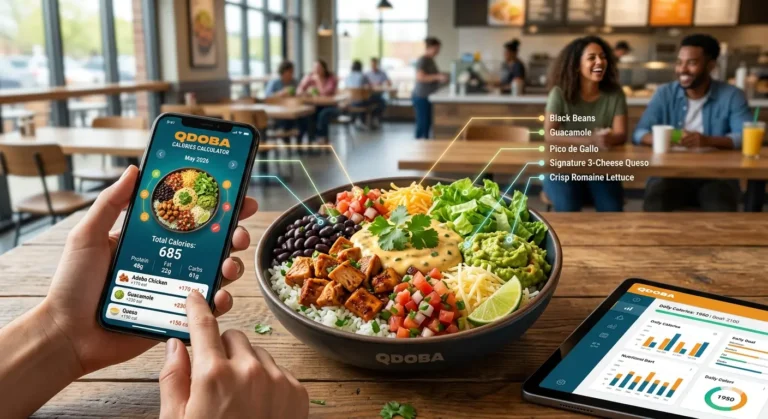
No. Adding nutrient values cannot assess cross-contact. Our calories calculator is a separate estimation tool; its totals do not approve ingredients for an allergy.
Is an allergen chart a complete recipe or ingredient list?
No. The chart identifies listed allergen flags, not every ingredient in a recipe. If you need a complete formulation or information about something outside the headings, ask the restaurant for appropriate product details.
Use the chart as the start of the conversation
Match the product, preserve the meaning of the symbols and ask the restaurant about the remaining uncertainties. This page provides a structured way to read the information. It does not replace management’s knowledge of the current order or individualized clinical advice, and no ordering method described here guarantees an allergen-free meal.


2 Comments